Mechanical engineering has always been a discipline in motion, but the pace of change in 2026 is unlike anything the profession has experienced in living memory. In less than a decade, the field has absorbed artificial intelligence, quantum sensing, advanced soft robotics, 4D-printed metamaterials, hydrogen propulsion systems, and real-time digital twins, each transformative individually, and together reshaping what it means to be a mechanical engineer.
This is not a list of futuristic concepts. These are technologies being deployed in factories, hospitals, laboratories, and energy systems right now. Mechanical engineers who understand them are commanding salary premiums of 15 to 25 percent above industry averages. Companies that have adopted them are reducing development timelines by 30 to 40 percent and cutting production costs significantly. The advances covered in this guide are not optional knowledge for the modern engineering professional. They are the new baseline.
This article covers the 12 most significant latest advances in mechanical engineering as of 2026: what each one is, why it matters, the data behind its adoption, the industries it is transforming, and what it means for engineers building careers today. Every section includes market data, real-world application examples, and direct career implications, content that no competing article provides.
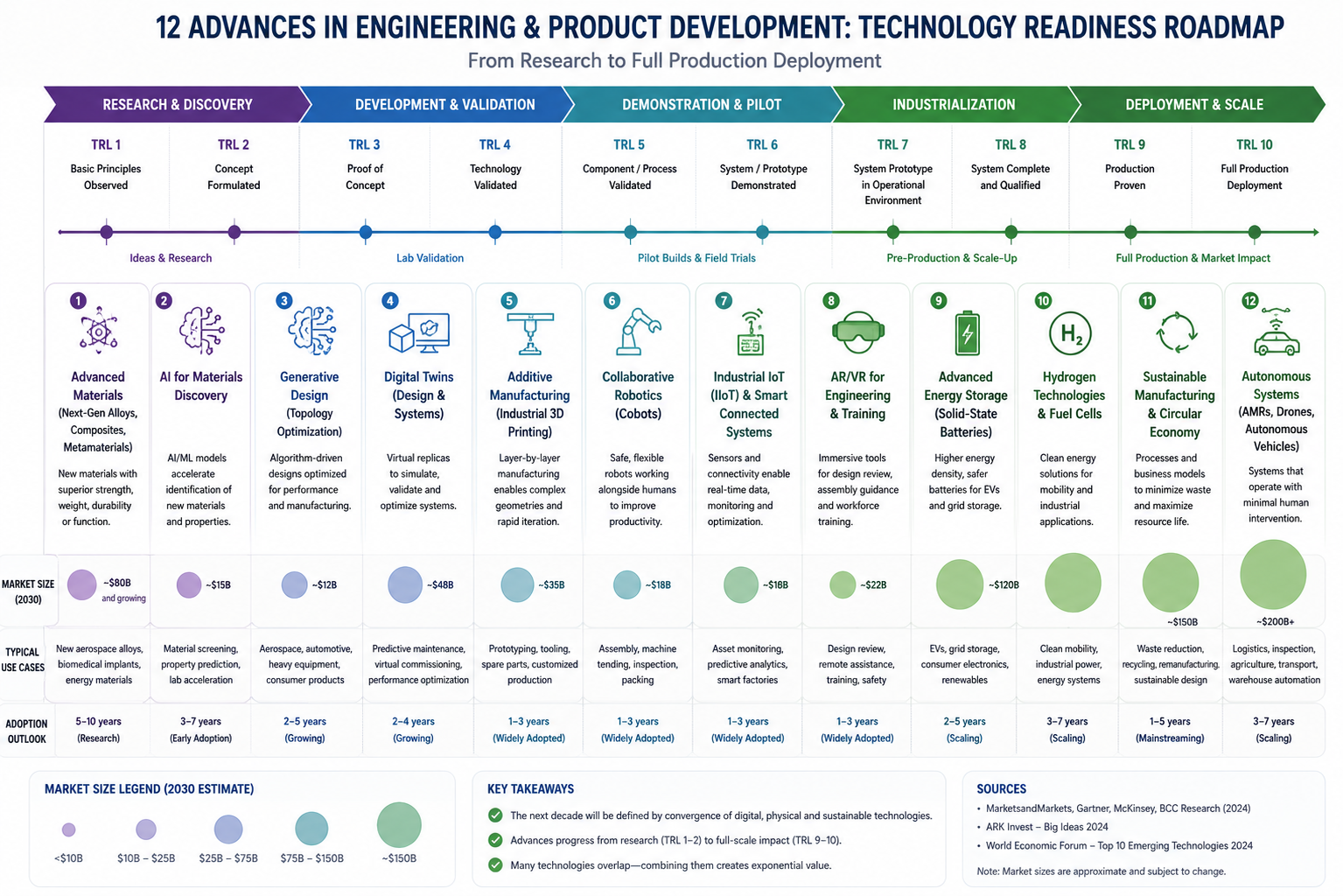
| Key Statistic: The U.S. Bureau of Labor Statistics reports the median annual wage for mechanical engineers reached $102,320 in May 2024, more than double the national median for all occupations. Employment is projected to grow 11 percent from 2023 to 2033, described as ‘much faster than average’, generating approximately 19,800 new job openings annually. Specialisations in AI-integrated roles, renewable energy, and robotics are commanding premiums of 15 to 25 percent above manufacturing averages. |
Why 2026 Is a Pivotal Year for Mechanical Engineering
Mechanical engineering has always evolved, but typically in cycles measured in decades. A new manufacturing process here, a new simulation method there. What is different now is the simultaneous convergence of multiple transformative technologies, each mature enough to deploy at industrial scale, each reinforcing and enabling the others.
Artificial intelligence is accelerating the design phase. Metal 3D printing is enabling geometries that were previously impossible. Digital twins are closing the loop between virtual design and physical reality. Advanced materials are overturning decades-old assumptions about what is strong, light, and thermally stable. Robotics is no longer confined to cage-enclosed factory automation. Hydrogen and electrification are reshaping propulsion engineering from its foundations.
The engineers who will thrive in this environment are not those who understand one of these shifts in isolation. They are those who understand how they connect, how mastery of AI-assisted generative design changes what additive manufacturing can achieve, how digital twins enable predictive maintenance, how soft robotics and metamaterials are creating new categories of mechanical devices that did not exist five years ago. This guide provides that connected view.
| Technology Area | Market Size 2024/2026 | Projected Growth | Primary Engineering Impact |
| Factory Automation | $227 billion (2026) | $461 billion by 2031 (ASME) | Cobots, adaptive manufacturing, AI-controlled production lines |
| Additive Manufacturing (global) | $21 billion (2024) | $73 billion by 2031 (MarketsandMarkets) | Metal AM for production parts; medical implants; aerospace structures |
| Digital Twins Market | $17 billion (2024) | $110 billion by 2032 (Grand View Research) | Real-time monitoring; predictive maintenance; virtual testing |
| Industrial Robotics | $48 billion (2024) | $100+ billion by 2030 (IFR) | Cobots, autonomous mobile robots, surgical robots |
| Hydrogen Economy | $260 billion (2023 investment) | Projected $1+ trillion/year by 2050 (IEA) | Fuel cell systems, hydrogen turbines, storage vessel design |
| Nanomaterials Market | $12.42 billion (2023) | 15% CAGR through 2030 | Lightweight composites, MEMS, energy storage, biomedical implants |
| Soft Robotics Market | $2.5 billion (2024) | $10.7 billion by 2030 (Grand View Research) | Medical devices, food handling, wearables, search-and-rescue |
Advance 1: AI-Driven Design and Generative Engineering
Artificial intelligence has entered the mechanical engineering design process at multiple levels simultaneously, and its impact is already measurable. AI-driven design tools and generative design software are not replacing engineers. They are dramatically expanding the design space any engineer can explore in a given time.
Generative Design: Exploring Thousands of Solutions Simultaneously
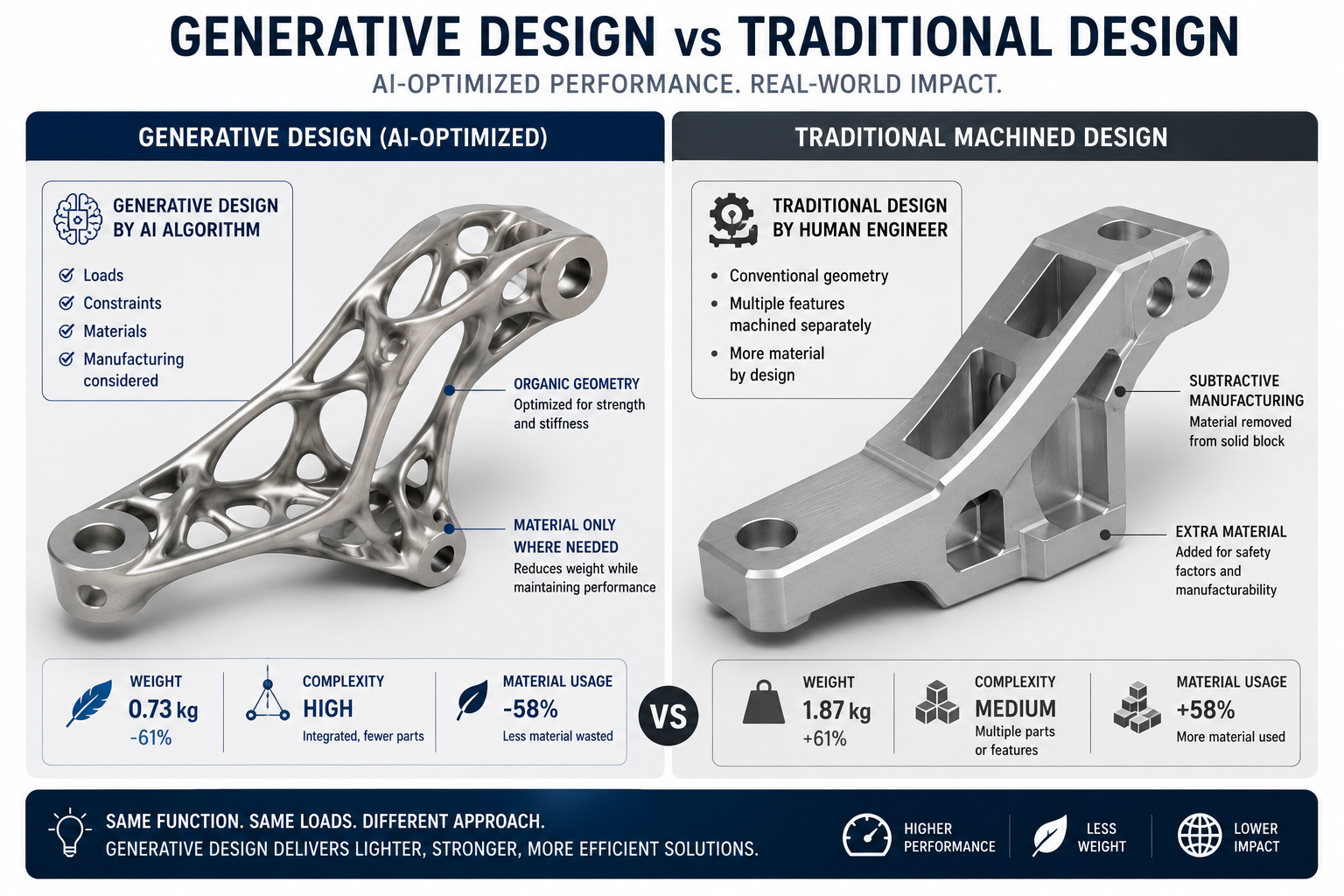
Generative design uses AI algorithms to explore thousands of potential design geometries based on engineering constraints and objectives defined by the engineer: load cases, material constraints, manufacturing method, weight targets, and cost limits. The software produces optimised geometry candidates that are typically organic in shape, because they are mathematically optimised rather than geometrically intuited, and often achieve the same structural performance as a conventional design at 30 to 50 percent lower mass.
Autodesk Fusion 360, SolidWorks with SOLIDWORKS Simulation, and nTop (formerly nTopology) are among the leading platforms offering generative design capabilities. SOLIDWORKS’ AI-powered co-pilot Aura, launched in 2026, adds conversational AI assistance directly into the design workflow, allowing engineers to query design performance, request automatic geometry modifications, and receive real-time suggestions.
AI in Manufacturing: From Toolpath to Quality Control
Beyond design, AI in manufacturing is being embedded into CNC machining, injection moulding, and additive manufacturing workflows. AI-driven toolpath optimisation in CAM software reduces machining time and tool wear. Computer vision systems on production lines detect surface defects in real time at accuracy levels that exceed human inspectors. Machine learning models monitor process parameters and adjust them automatically to maintain dimensional accuracy as tools wear.
| Career Impact: The role of AI Systems Integration Engineer is already appearing on engineering job boards, requiring the ability to embed AI algorithms directly into mechanical systems while maintaining rigorous understanding of physical constraints. Engineers with combined mechanical and AI/ML competency are commanding premiums of 20 to 30 percent above peers without those skills. |
Advance 2: Metal Additive Manufacturing at Production Scale
Metal additive manufacturing has crossed the threshold from prototyping tool to genuine production technology. This is arguably the single most structurally significant manufacturing advance of the past decade for mechanical engineers, because it removes geometric constraints that have governed component design since the invention of machining.
What Metal AM Enables That Machining Cannot
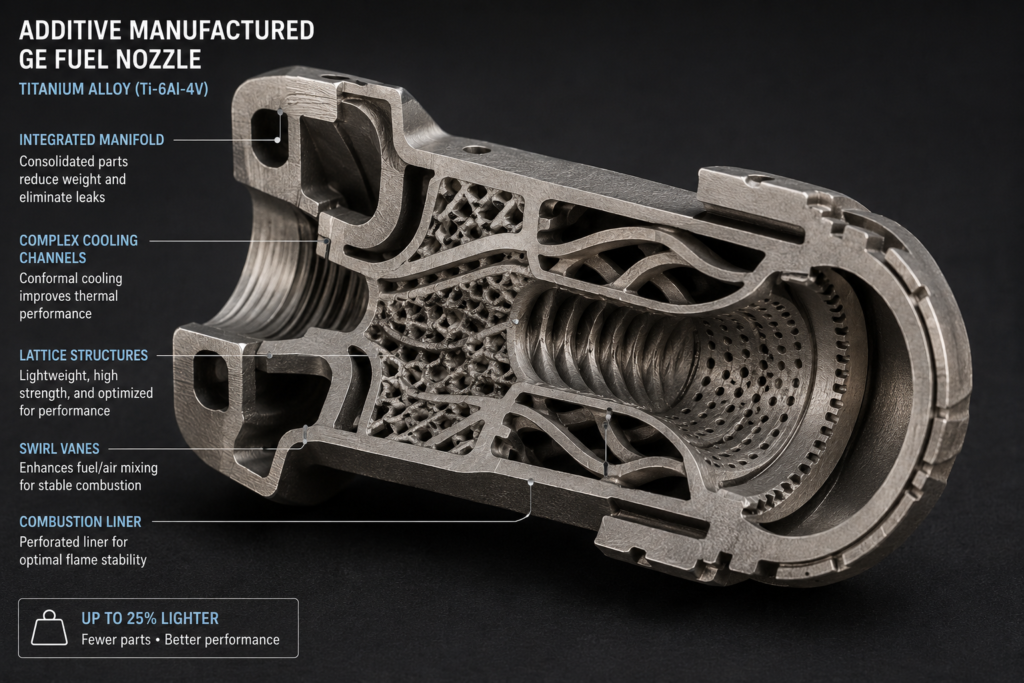
Traditional subtractive manufacturing (machining) produces components by removing material from a solid block. This imposes fundamental geometric constraints: internal channels must be accessible to cutting tools, undercuts require special fixturing, and complex organic geometries are prohibitively expensive to machine. Metal additive manufacturing builds components layer by layer from metal powder or wire, removing virtually all geometric constraints. Internal lattice structures, conformal cooling channels, biomimetic organic geometries, and topology-optimised shapes can all be produced directly from CAD data.
Key Metal AM Technologies in 2026
- Laser Powder Bed Fusion (LPBF / SLM): The dominant technology for producing dense, high-accuracy metal parts in titanium, Inconel, stainless steel, and aluminium alloys. Used for aerospace brackets, medical implants, and tooling inserts.
- Directed Energy Deposition (DED): Enables the addition of material onto existing components (repair and overhaul) and the production of large near-net-shape components. Used in aerospace repair, energy sector component refurbishment.
- Binder Jetting: High-throughput, lower-cost process suited to high-volume production of smaller components in steel and copper alloys. Advancing rapidly toward automotive-scale deployment.
- Wire Arc Additive Manufacturing (WAAM): Uses welding wire and an arc heat source to deposit large metallic structures at low cost. Suited for maritime and offshore structural components, large aerospace structural elements.
The global additive manufacturing market was valued at approximately $21 billion in 2024 and is projected to reach $73 billion by 2031, with metal AM representing the fastest-growing segment. SpaceX’s Raptor engine uses 3D-printed metal components for its combustion chamber. GE Aviation produces more than 100,000 fuel nozzle tips annually using metal AM, achieving a component that is 25 percent lighter and five times more durable than its machined predecessor.
Advance 3: Digital Twins Moving from Prototype to Standard Practice
A digital twin is a real-time, high-fidelity virtual model of a physical system, continuously updated with live sensor data from its physical counterpart. The concept has existed in research for two decades. What is new is that the combination of affordable IoT sensors, cloud computing, and physics-based simulation has made digital twins practical and cost-effective at industrial scale.
What Digital Twins Enable
A well-implemented digital twin allows engineers to monitor asset health in real time, simulate the consequences of proposed changes before implementing them on the physical system, predict maintenance needs before failures occur, and optimise operational parameters continuously based on actual operating conditions rather than design assumptions. In industries where unplanned downtime is extremely costly, the return on investment is compelling: documented industrial deployments report reductions in unplanned downtime of 30 to 50 percent.
Siemens, GE, and Rolls-Royce all operate digital twin programs for their turbine and engine products. Rolls-Royce’s IntelligentEngine initiative creates a digital twin for every engine it produces, enabling remote performance monitoring and predictive maintenance scheduling that has significantly reduced airline maintenance costs and in-service disruptions.
Multi-Physics Simulation: Beyond Single-Domain Analysis
Parallel to the digital twin advance, multi-physics simulation has become standard practice for complex mechanical systems. Where engineers once simulated structural, thermal, and fluid behaviour separately and sequentially, modern platforms such as ANSYS, Comsol Multiphysics, and Siemens NX allow simultaneous coupled simulation across multiple physics domains. For automotive power electronics cooling systems, for example, engineers now routinely model fluid flow, heat transfer, and structural stress simultaneously, a workflow that has been reported to reduce development time by 40 percent while improving design confidence.
Advance 4: Collaborative Robotics and Adaptive Automation
Industrial robotics is not new. What is new is collaborative robotics (cobots): robots designed to work alongside human workers in shared spaces, without safety cages, sensing proximity, adjusting force, and performing precision tasks in environments that are too hazardous or ergonomically demanding for humans.
Why Cobots Are Changing Manufacturing
Traditional industrial robots are programmed for highly repetitive tasks in precisely defined environments. They are expensive to reprogram, require significant safety infrastructure, and cannot safely share a workspace with humans. Cobots address all three limitations. They are force-limited, vision-guided, and easily reprogrammed by non-specialists through direct teaching (physically guiding the robot through a task). They are being deployed in small and medium manufacturers who could not previously justify robotic automation.
The global industrial robotics market reached approximately $48 billion in 2024 and is projected to exceed $100 billion by 2030 according to the International Federation of Robotics (IFR). Autonomous Mobile Robots (AMRs), which navigate dynamically through warehouse and factory environments using LIDAR and computer vision, are now standard in logistics facilities operated by companies including Amazon, DHL, and Ocado.
| Engineering Reality Check: Mechanical engineers are central to cobot and robot development, designing the structural frames, actuator systems, wrist mechanisms, and end effectors. The transition from rigid industrial robots to soft, compliant cobots requires deep mechanical engineering expertise in flexible mechanism design, contact mechanics, and force-controlled actuation, precisely the areas where mechanical engineers with robotics specialisation are most scarce and most valuable. |
Advance 5: Soft Robotics and Bio-Inspired Mechanical Systems
Soft robotics represents one of the most philosophically significant departures from traditional mechanical engineering thinking. Conventional mechanical systems are built from rigid components: metal frames, hard actuators, stiff linkages. Soft robotics replaces rigid structures with compliant, deformable bodies made from elastomers, hydrogels, and pneumatically or thermally actuated smart materials, drawing direct inspiration from biological organisms.
Why Soft Robots Solve Problems Rigid Robots Cannot
Rigid robots interact with the world through precise, force-controlled contact. They excel at tasks with well-defined geometry and predictable environments. They struggle in unstructured environments, with fragile objects, in confined spaces, and in direct contact with human tissue. Soft robots, because they deform and conform rather than imposing rigid force, are inherently safer, more adaptable, and more capable in these scenarios.
Applications are advancing rapidly: soft robotic grippers for food handling and agricultural harvesting (where fragile produce must be grasped without damage), soft robotic endoscopes and surgical tools that navigate the human body through natural orifices, wearable soft exosuits that augment human strength and assist post-stroke rehabilitation, and 4D-printed soft microrobots that change shape in response to temperature, magnetic fields, or chemical stimuli for targeted drug delivery and minimally invasive surgery.
The soft robotics market was valued at approximately $2.5 billion in 2024 and is projected to reach $10.7 billion by 2030. Harvard’s Wyss Institute, MIT’s CSAIL, and a growing cohort of commercial startups are driving development, but the mechanical engineering principles at the heart of soft robotics, continuum mechanics, flexible beam theory, nonlinear elasticity, and fluid-structure interaction, are exactly the subjects covered in advanced ME programs.
Advance 6: Mechanical Metamaterials and 4D Printing
Mechanical metamaterials are engineered structures whose mechanical properties derive from their geometric architecture rather than the intrinsic properties of the material they are made from. By carefully designing the arrangement of unit cells at the micro or meso scale, engineers can produce structures with properties that no naturally occurring material possesses: negative Poisson’s ratio (expanding laterally when stretched), programmable stiffness, acoustic cloaking, and energy absorption profiles engineered to a specific crash event.
From Lattice Structures to Programmable Matter
The intersection of mechanical metamaterials and additive manufacturing has opened a new domain of engineering capability. Lattice-structured parts produced by metal LPBF can be designed to have tailored stiffness in specific directions, density distributions that match the load path through a component, and progressive crushing behaviour for energy absorption applications.
4D printing extends this further by adding time as a design dimension. 4D-printed structures are made from stimuli-responsive materials (shape memory polymers, hydrogels, liquid crystal elastomers) that change shape, stiffness, or other properties in response to heat, moisture, light, or magnetic fields. Published research in 2026 and 2026 demonstrates 4D-printed metamaterials with programmable reconfiguration capability for applications including deployable aerospace structures, autonomous health-monitoring systems, biomimetic soft robotic actuators, and adaptive wearable devices.
| Research Frontier: Magnetoactive metamaterials (MMs), which integrate magnetoactive soft composite materials with architected mechanical structures, can dynamically change their mechanical, acoustic, and elastic properties through the application of an external magnetic field. This enables tunable vibration dampers, shape-morphing medical devices, and remotely reconfigurable robotic systems, applications that were entirely in the realm of research science five years ago and are now moving toward early commercial deployment. |
Advance 7: Hydrogen Energy Systems and Mechanical Engineering
Hydrogen is widely regarded as the most technically viable pathway to decarbonising industrial processes and long-distance transport that cannot be practically electrified. The mechanical engineering challenges of the hydrogen economy are enormous and diverse, spanning materials science, thermodynamics, fluid mechanics, and structural integrity.
The Mechanical Engineering Challenges of Hydrogen
Hydrogen is the smallest molecule in existence, which creates unique engineering challenges. It diffuses through many conventional materials, causing hydrogen embrittlement: a reduction in ductility and fracture toughness that can lead to unexpected failure in steel pressure vessels and pipelines. Mechanical engineers specialising in hydrogen systems engineering must select and qualify materials resistant to hydrogen embrittlement, design storage vessels that maintain structural integrity under cyclic pressurisation, and develop sealing systems capable of preventing the escape of a molecule that passes through most conventional seals.
Cryogenic hydrogen storage (liquid hydrogen at -253 degrees Celsius) introduces a further set of thermal engineering challenges: insulation systems must prevent heat ingress at temperatures approaching absolute zero, and structural materials must maintain ductility and toughness at cryogenic temperatures where many metals become brittle.
Hydrogen Turbines and Fuel Cell Mechanical Systems
The adaptation of gas turbines to burn hydrogen rather than natural gas is a significant mechanical engineering undertaking. Hydrogen combustion produces higher flame temperatures and significantly different combustion dynamics than natural gas, requiring redesigned combustor liners, modified turbine blade cooling circuits, and new coating systems to handle the increased thermal load. Siemens Energy and GE Vernova are both conducting field trials of hydrogen-capable gas turbines, and the engineering demand for specialists in this area is projected to grow 45 percent by 2030 according to sector analysis.
Advance 8: Electric Vehicle Powertrain and Thermal Engineering
The global transition to electric vehicles is creating one of the largest structural shifts in automotive mechanical engineering since the introduction of computer-controlled fuel injection. By 2030, 40 percent of automotive engineering jobs are projected to require expertise in EV powertrain systems and AI-driven diagnostics, with traditional internal combustion engine roles transforming into energy optimisation and electromechanical systems engineering.
Battery Thermal Management: The Critical Mechanical Engineering Problem in EVs
Lithium-ion battery cells perform optimally within a narrow temperature range of approximately 15 to 35 degrees Celsius. Below this range, capacity drops sharply. Above it, degradation accelerates and thermal runaway (an uncontrolled exothermic reaction that can cause fire) becomes a risk. Battery thermal management system (BTMS) design is one of the most demanding thermal engineering challenges in current automotive work, requiring the design of cooling plates, phase-change material systems, and heat pipe networks that maintain uniform cell temperatures across a battery pack spanning hundreds of cells.
Lightweight Structural Engineering for EVs
Battery packs are heavy. A typical EV battery pack weighs 400 to 700 kilograms, placing significant mass at the vehicle’s base. Mechanical engineers working in EV structural design must offset this weight through aggressive lightweighting of the vehicle body and chassis using advanced aluminium alloys, carbon fibre composites, and topology-optimised structural components. Companies like Tesla and Rivian are prioritising lightweight material expertise, with composite engineers reportedly earning 20 percent higher salaries than equivalent conventional automotive roles.
Advance 9: Advanced Composites and Smart Materials
The materials available to mechanical engineers in 2026 are fundamentally more capable than those available a generation ago, and the pace of materials innovation is accelerating. Three areas are particularly significant: advanced composites, self-healing materials, and shape memory alloys.
Carbon Fibre Reinforced Polymers (CFRP): Expanding from Aerospace to Mainstream
Carbon fibre reinforced polymer composites offer specific stiffness and specific strength values that no metal alloy can match. Once confined to aerospace and motorsport, CFRP is now entering automotive, wind energy, medical devices, and consumer products as manufacturing processes have matured and costs have reduced. Automated Fibre Placement (AFP) and resin transfer moulding at scale are enabling the production of large composite structures at automotive production rates.
Self-Healing Materials: Components That Repair Themselves
Self-healing materials are a class of advanced engineering materials that can autonomously repair damage such as cracks, scratches, or delamination. They contain microencapsulated healing agents that release and polymerise when a crack propagates through the material, restoring structural integrity without human intervention. Published research from 2024 demonstrates self-healing polymer matrices for fibre composite structures with healing efficiency of 80 to 95 percent of original fracture toughness, opening potential applications in offshore wind turbine blades, pressure vessels, and aerospace panels that are difficult to inspect and repair conventionally.
Shape Memory Alloys and Actuators
Shape memory alloys (SMAs), most commonly Nitinol (nickel-titanium alloy), undergo a reversible phase transformation when heated or cooled, enabling them to recover a programmed shape after deformation. SMAs are used in stents, orthodontic wires, actuators in aerospace morphing structures, and thermal actuators in HVAC systems. Their capacity to serve simultaneously as structural material and actuation mechanism makes them particularly attractive for applications where conventional actuators (motors, hydraulics) are too heavy or too complex.
Advance 10: Microelectromechanical Systems (MEMS) and Nanotechnology
Microelectromechanical Systems (MEMS) are microscale devices that combine mechanical and electrical components on a single silicon or polymer chip, fabricated using semiconductor manufacturing processes. MEMS are not a new technology, but their capabilities, range of applications, and volume of deployment are expanding rapidly.
MEMS Applications Transforming Industries
MEMS accelerometers in every modern smartphone trigger airbags, enable screen rotation, and provide orientation data for augmented reality applications. MEMS pressure sensors monitor tyre pressure, blood pressure, and industrial process conditions continuously and wirelessly. MEMS microfluidic chips (lab-on-a-chip) perform medical diagnostic tests in minutes using a drop of blood, bringing laboratory-quality analysis to point-of-care settings globally.
Nanomaterials: The Materials Science Frontier
At the nanoscale, materials behave differently from their bulk counterparts, and this opens engineering opportunities that are not available at conventional scales. Graphene, carbon nanotubes (CNTs), and metallic nanoparticles are among the most engineered nanomaterials, offering extraordinary combinations of strength, electrical conductivity, and thermal conductivity. The global nanomaterials market, valued at $12.42 billion in 2023, is projected to grow at 15 percent annually through 2030, driven by demand from electronics, medical devices, energy storage, and structural composites.
Advance 11: Space-Based Manufacturing and Extreme Environment Engineering
The commercialisation of space is creating a new frontier for mechanical engineering that requires both extreme performance engineering and a fundamental rethinking of manufacturing logic. Space-based manufacturing is no longer purely speculative: NASA, ESA, and commercial operators are actively developing in-space manufacturing capabilities for structural components, optical fibres, pharmaceutical crystals, and semiconductor devices that can be produced with superior properties in the microgravity environment of orbit.
Reusable Launch Systems: The Structural Engineering Achievement of the Decade
The development of fully reusable launch vehicles by SpaceX (Falcon 9 and Starship) is perhaps the most demanding structural and thermal mechanical engineering achievement of the past decade. Rocket structures must survive launch loads, re-entry thermal gradients exceeding 1,600 degrees Celsius on heat shield surfaces, and precision propulsive landing, while being refurbishable and re-flyable with minimal inspection and maintenance. The fatigue analysis, thermal protection system design, and propellant system engineering required for reusable launch vehicle development represent the cutting edge of applied mechanical engineering.
Extreme Environment Materials Engineering
Beyond space, the demand for components that can survive extreme environments is growing in nuclear energy, deep-sea energy extraction, and high-performance aerospace. Next-generation nuclear reactors require structural materials that can maintain integrity under high-flux neutron bombardment, elevated temperatures, and corrosive coolants for decades without replacement. Oxide Dispersion Strengthened (ODS) steels and ceramic matrix composites (CMCs) are among the advanced materials being developed for these applications, both requiring sophisticated mechanical engineering analysis and manufacturing process development.
Advance 12: Predictive Maintenance and Industrial IoT
The combination of Industrial Internet of Things (IIoT) sensor networks and machine learning algorithms is transforming how mechanical systems are maintained. Traditional maintenance is either scheduled (replace after a fixed time or number of cycles regardless of actual condition) or reactive (repair after failure). Predictive maintenance uses continuous sensor data (vibration signatures, acoustic emissions, temperature distributions, oil particle counts) and machine learning models to predict when a component is approaching failure, allowing maintenance to be scheduled precisely when needed, not too early and not too late.
What Predictive Maintenance Requires from Mechanical Engineers
Implementing an effective predictive maintenance system requires mechanical engineers who understand both the physics of component degradation (which failure modes are occurring, why, and how they manifest in sensor signatures) and the data infrastructure for collecting, transmitting, and analysing large volumes of sensor data. This is precisely the cross-disciplinary skill set that defines the most sought-after mechanical engineers in 2026: deep domain knowledge of mechanical systems combined with data literacy and machine learning awareness.
Rolls-Royce, Siemens, SKF, and dozens of industrial equipment manufacturers have deployed predictive maintenance systems that have documented reductions in unplanned downtime of 30 to 50 percent, maintenance cost reductions of 10 to 25 percent, and extensions in asset operating life. These are not marginal improvements: for a large industrial facility, they translate to savings of tens of millions of dollars annually.
How These Advances Are Changing Mechanical Engineering Careers
The latest advances in mechanical engineering are not abstract research topics for most of the profession. They are actively reshaping the skills that employers are looking for, the roles that are being created, and the salary premiums available to engineers who develop the right competencies.
| Technology Advance | New / Transformed Roles | Skills Required | Salary Premium (vs. Avg. ME) |
| AI-Driven Design | AI Systems Integration Engineer; Generative Design Specialist | Python/ML basics, ANSYS/Fusion 360 with AI tools, topology optimisation | +20 to 30% |
| Metal Additive Manufacturing | AM Process Engineer; DfAM Specialist; Powder Metallurgist | LPBF/DED process knowledge, DfAM principles, metallurgy | +15 to 25% |
| Digital Twins | Digital Twin Engineer; Simulation Data Engineer | IoT sensor integration, physics-based modelling, cloud platforms (Azure/AWS) | +15 to 20% |
| Cobots / Robotics | Robotics Mechanical Engineer; Cobot Integration Specialist | ROS, robot kinematics, mechanism design, force-controlled actuation | +15 to 25% |
| Soft Robotics | Soft Robotics Engineer; Compliant Mechanism Designer | Continuum mechanics, elastomer materials, pneumatic actuation | +20 to 30% (specialist scarcity) |
| Hydrogen Systems | Hydrogen Systems Engineer; Fuel Cell Mechanical Engineer | Hydrogen embrittlement, cryogenics, high-pressure vessel design, codes/standards | +20 to 35% |
| EV Powertrain / BTMS | BTMS Engineer; EV Structural Engineer; Battery Integration Engineer | Thermal management, CFD, lightweight materials, battery cell chemistry basics | +15 to 25% |
| Predictive Maintenance / IIoT | Reliability Engineer with ML skills; IIoT Mechanical Systems Engineer | Vibration analysis, sensor systems, Python/MATLAB, machine learning basics | +10 to 20% |
| Strategic Career Advice: The data is clear: mechanical engineers who develop depth in one or two of these advancing areas, while maintaining strong mechanical engineering fundamentals, are in the highest demand and command the strongest salary premiums. The most powerful combination in 2026 is strong classical ME foundations plus one high-growth specialisation (hydrogen, additive manufacturing, EV thermal systems, or AI-integrated design). Adding basic Python or MATLAB data skills amplifies the premium further in roles involving simulation, predictive maintenance, or digital twin development. |
Frequently Asked Questions (FAQ)
What are the latest advances in mechanical engineering?
The most significant latest advances in mechanical engineering in 2026 include AI-driven generative design, metal additive manufacturing at production scale, real-time digital twins, collaborative robotics and cobots, soft robotics and bio-inspired systems, mechanical metamaterials and 4D printing, hydrogen energy system engineering, electric vehicle thermal management, advanced composites and self-healing materials, MEMS and nanotechnology, space-based manufacturing, and IIoT-driven predictive maintenance. Each of these is being deployed at industrial scale and is creating new career opportunities for mechanical engineers.
How is AI changing mechanical engineering?
AI is changing mechanical engineering in several simultaneous ways: generative design algorithms explore thousands of optimised design geometries based on engineering constraints; AI-assisted CAM software optimises machining toolpaths and reduces tool wear; computer vision systems perform real-time quality inspection on production lines; machine learning models embedded in digital twins predict equipment failures before they occur; and AI-powered chatbot assistants in CAD platforms offer real-time design suggestions. Engineers with combined mechanical engineering and AI/ML competency are commanding salary premiums of 20 to 30 percent above peers without those skills.
What is additive manufacturing in mechanical engineering?
Additive manufacturing (3D printing) in mechanical engineering is a family of processes that build components layer by layer from digital design data, most commonly from metal powders, polymer filaments, or resins. For mechanical engineers, the most significant advance is metal additive manufacturing, which enables the production of complex geometries that cannot be machined, including internal lattice structures, conformal cooling channels, and topology-optimised organic shapes. The global additive manufacturing market was valued at $21 billion in 2024 and is projected to reach $73 billion by 2031.
What is a digital twin in mechanical engineering?
A digital twin in mechanical engineering is a real-time virtual model of a physical asset or system, continuously updated with live sensor data from its physical counterpart. It allows engineers to monitor asset health remotely, simulate the effect of proposed changes before implementing them, predict maintenance needs before failures occur, and optimise operational parameters based on actual conditions. Industrial deployments have documented reductions in unplanned downtime of 30 to 50 percent, and the digital twins market is projected to reach $110 billion by 2032.
What is the future of mechanical engineering?
The future of mechanical engineering is defined by the convergence of traditional physical engineering with digital intelligence, sustainable energy systems, and advanced materials. Key directions include: AI-assisted design becoming standard practice; metal additive manufacturing replacing machining for complex components; hydrogen and electrification reshaping energy and transport engineering; soft robotics expanding into healthcare and agriculture; and predictive maintenance transforming industrial operations. The U.S. BLS projects 11 percent employment growth from 2023 to 2033, with the highest demand in renewable energy, robotics, and AI-integrated engineering roles.
What is soft robotics in mechanical engineering?
Soft robotics in mechanical engineering is a sub-discipline that designs robots and actuators from compliant, deformable materials (elastomers, hydrogels, shape memory polymers) rather than rigid metal or plastic structures. Inspired by biological organisms, soft robots can safely interact with humans and delicate objects, navigate confined and unstructured environments, and change shape in response to environmental stimuli. Applications include surgical robots, agricultural harvesting systems, wearable exosuits, and 4D-printed microrobots for targeted drug delivery. The soft robotics market is projected to reach $10.7 billion by 2030.
What are mechanical metamaterials?
Mechanical metamaterials are engineered structures whose mechanical properties (stiffness, density, acoustic behaviour, Poisson’s ratio) derive from their geometric architecture rather than the intrinsic properties of their constituent material. By designing the arrangement of unit cells at the micro or meso scale, engineers can produce structures with properties not found in nature, such as negative Poisson’s ratio, programmable stiffness, and tailored energy absorption. Combined with 4D printing, mechanical metamaterials can be designed to change shape or properties in response to stimuli, enabling applications in deployable aerospace structures, adaptive wearables, and soft robotic actuators.
How is mechanical engineering involved in the hydrogen economy?
Mechanical engineering is central to the hydrogen economy across multiple technical dimensions: designing high-pressure storage vessels and pipelines that are resistant to hydrogen embrittlement, developing cryogenic insulation systems for liquid hydrogen storage, engineering combustor modifications to gas turbines for hydrogen firing, designing mechanical compression and liquefaction systems for hydrogen logistics, and developing fuel cell stack mechanical assemblies. The demand for hydrogen systems engineers is projected to grow 45 percent by 2030, with salary premiums of 20 to 35 percent above manufacturing averages.
Conclusion
The latest advances in mechanical engineering are not isolated innovations. They are interconnected, mutually reinforcing transformations that are collectively redefining what the discipline does, what tools it uses, what problems it can solve, and what it means to be competitively skilled as a practising engineer.
AI-driven generative design changes what additive manufacturing can produce. Additive manufacturing enables mechanical metamaterial geometries that no other process can create. Digital twins close the loop between virtual design and physical reality, making predictive maintenance economically viable. Soft robotics and advanced materials are creating entirely new categories of mechanical devices. Hydrogen and electrification are reshaping propulsion engineering at its foundations.
For students, the implication is clear: the most valuable mechanical engineering education in 2026 pairs rigorous classical engineering fundamentals with at least one of these advancing specialisations, plus data literacy sufficient to engage with AI tools, simulation platforms, and sensor-driven systems.
For practising engineers, the message is equally direct: the engineers commanding the strongest salary premiums are those who have extended their classical training into these new domains. The field has never offered more opportunity for those willing to keep learning.
Explore the broader context in our pillar guide What Is Mechanical Engineering?, understand the Frontiers of Mechanical Engineering for the research-level view, or review our guide to Mechanical Engineering Careers and Industries to see where these advances are creating the most new employment opportunities.

Leave a Reply